
Are you dreaming of an affordable tropical living experience, combining modern city life with rich cultural heritage? Then Expat life Malaysia might be calling your name.
Malaysia consistently ranks as one of the best retirement and residency destinations in Southeast Asia. This guide is your complete roadmap to moving to Malaysia, covering everything from navigating the immigration system to understanding the Malaysia cost of living and finding your perfect community. We’ll ensure you have the core concepts and practical details needed to make your move seamless.
Decoding the Cost of Living in Malaysia for Expats
One of the biggest draws for foreigners is the incredible value Malaysia offers. You can enjoy a Malaysian lifestyle of high quality with excellent amenities without the hefty price tag found in Singapore, Hong Kong, or many Western countries.
Housing: Renting an Apartment vs. Condo Living
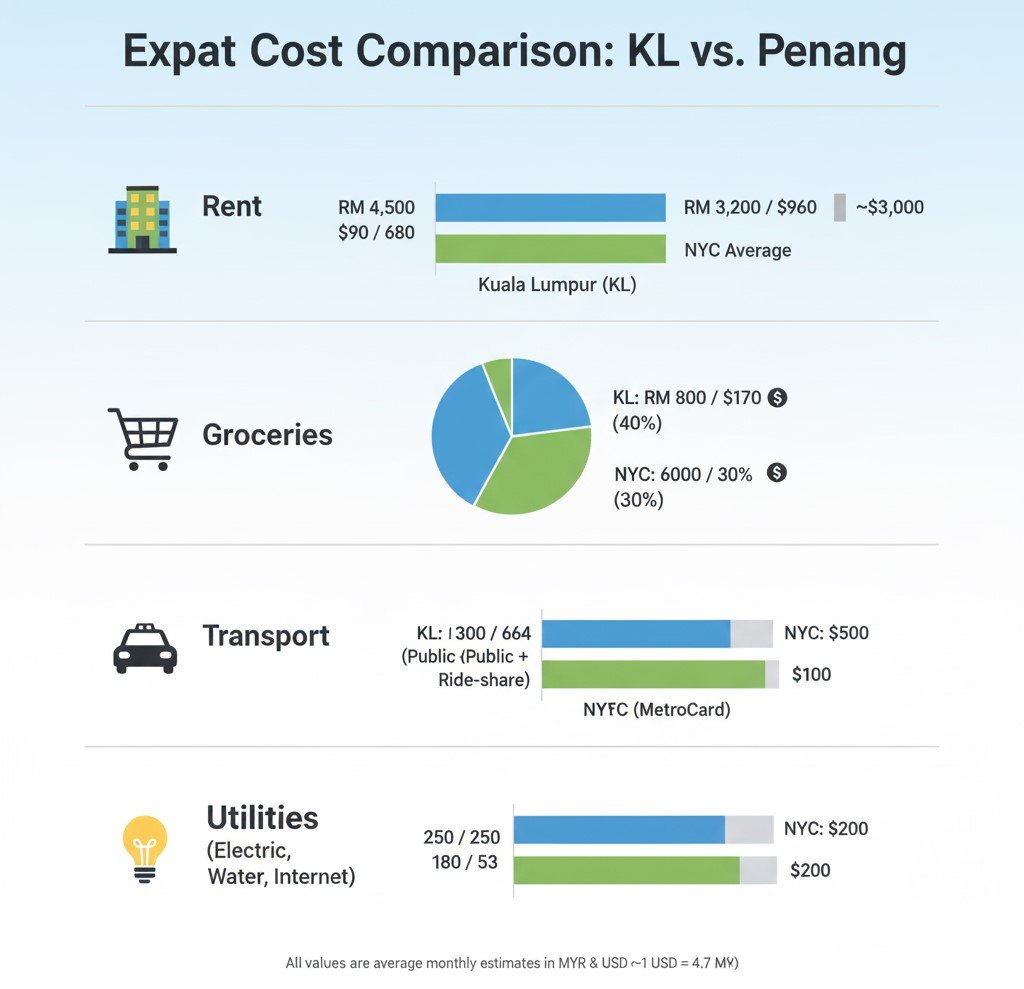
For most ex-pats live in Malaysia, housing will be their largest expense. The great news is that you get incredible value. In Kuala Lumpur (KL) and Penang, the preferred mode of living is a modern, guarded condo living apartment, often featuring pools, gyms, and 24-hour security.
| City | Expat-Friendly Neighborhood | Average Monthly Rent (3-Bedroom Condo) |
| Kuala Lumpur (KL) | Mont Kiara, Bangsar, KLCC | RM 3,500 – RM 7,000 (~$750 – $1,500 USD) |
| Penang (Georgetown) | Tanjung Bungah, Batu Ferringhi | RM 2,500 – RM 4,500 (~$530 – $960 USD) |
| Johor Bahru (JB) | Iskandar Puteri, Bukit Indah | RM 2,000 – RM 3,800 (~$430 – $810 USD) |
In areas like Mont Kiara, known for its dense expat community Malaysia and numerous international schools, rent sits at the higher end but still offers vast space and amenities far cheaper than comparable districts globally.
Daily Expenses: Food, Transport, and Entertainment
The sheer affordability of everyday life is what truly allows you to live well.
- Food: This is where Malaysia shines. A delicious meal at a hawker stall can cost as little as RM 8–15 ($1.70–$3.20 USD). Dining at mid-range international restaurants is significantly cheaper than in the West.
- Transport: While traffic can be a challenge, public transport in KL (LRT, MRT, Monorail) is efficient. Ride-hailing via Grab is incredibly cheap—a 20-minute ride rarely exceeds RM 20 ($4.30 USD). The cost of running a car is generally manageable, with affordable petrol, though vehicle prices can be high due to taxes.
Core Concept: A single expat can budget between RM 5,000 to RM 8,000 per month (~$1,000 – $1,700 USD) for a comfortable, middle-class Malaysian lifestyle (excluding major luxury spending).
Where to Live? Best Expat Cities & Neighborhoods
Choosing the right base is key to a successful experience. Malaysia offers a diverse range, from high-octane cities to quiet coastal retreats.
Kuala Lumpur (KL): The Urban Professional Hub
As Malaysia’s capital, Kuala Lumpur has the largest and most active expat community. It’s the top choice for working professionals and families seeking top-tier infrastructure, shopping, and nightlife.
- Best Areas: Mont Kiara (family-friendly, near international schools), Bangsar (hip, boutique shops, nightlife), and KLCC (luxury high-rise with city views).
Penang: Culinary Capital and Island Charm
Penang is beloved for its rich culture, colonial architecture, and world-famous street food. It offers a more relaxed pace than KL and is highly popular among retirees and food enthusiasts.
- Best Areas: George Town (UNESCO heritage area), Tanjung Bungah, and Batu Ferringhi (beachfront condos).
Johor Bahru (JB): The Singapore Gateway
Located right across the causeway from Singapore, Johor Bahru is a growing hub for expats who work in the highly-paid Singapore market but prefer the vastly lower Malaysia cost of living.

Visa Pathways: Your Long-Term Stay Options
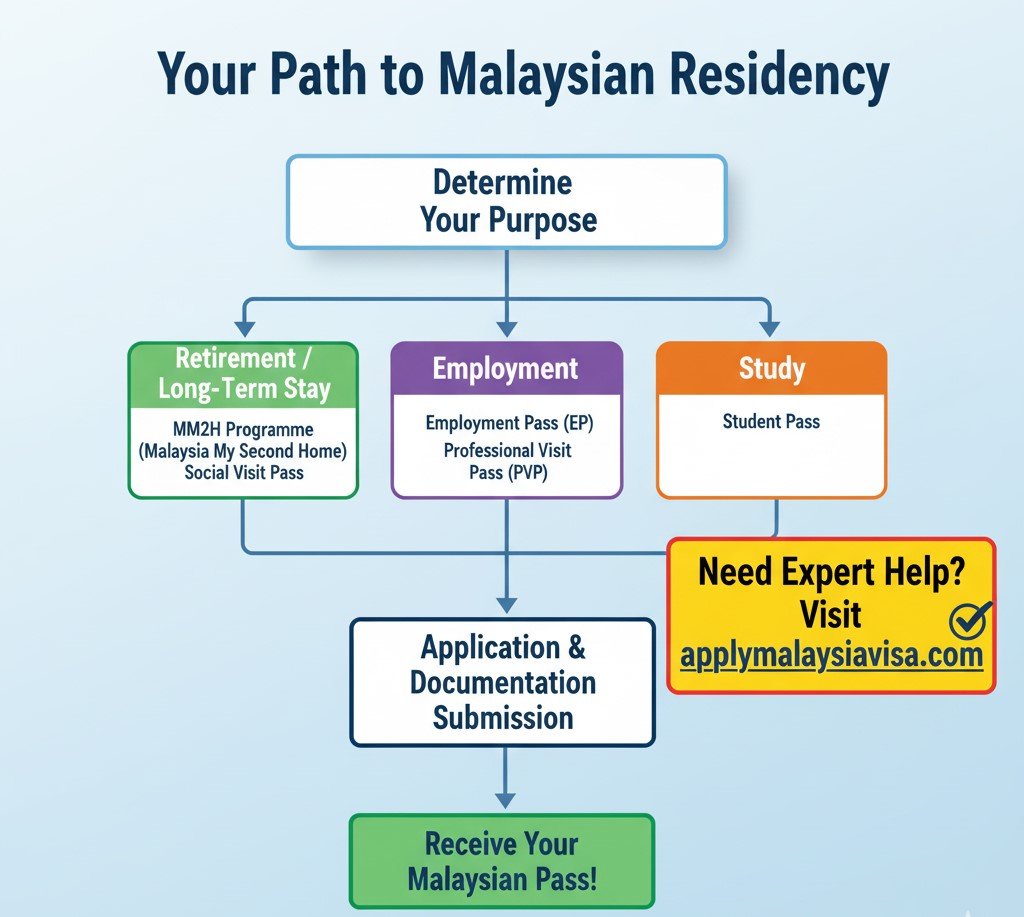
Securing your right to live long-term in the country is the first and most critical hurdle when moving to Malaysia. The primary routes cater to retirees, investors, and employed professionals.
The Malaysia My Second Home (MM2H) Programme
The MM2H program is the most popular visa for those seeking long-term residency (often 5, 10, or 15-20 years, depending on the tier). It is essentially a long-term social visit pass designed for foreign nationals to live, but not work, in Malaysia.
The MM2H program has been revamped and now operates in three tiers (Silver, Gold, Platinum) with specific financial requirements, including mandatory property purchase and fixed deposit amounts, alongside a minimum stay requirement (90 days per year for certain age groups).
Employment Pass (EP) and Professional Visit Pass (PVP)
For those work in Malaysia for foreigners, the Employment Pass is the standard requirement. This pass requires local sponsorship by a Malaysian employer and is managed through the Expatriate Services Division (ESD). It covers professionals and management staff with specific salary thresholds.
Seamless Visa Application Support
Navigating the official requirements, security screenings, and gathering the substantial documentation for an MM2H or other long-term visa can be complex, time-consuming, and confusing.
For professional assistance and a streamlined application process, we recommend visiting our trusted partners for specialized guidance. They offer expertise to ensure your application is correct and compliant from the start, significantly easing your journey to permanent residency or a long-term stay.
Start your journey to long-term residency with confidence. For comprehensive, expert help with your visa and immigration needs, visit
https://applymalaysiavisa.com/today.
Family & Education: International Schools and Healthcare
For expat families and retirees, the quality of amenities is a primary concern.
Top-Tier Healthcare for Foreigners
Malaysia is renowned globally for its high-quality, affordable healthcare. The private hospital sector is excellent, offering state-of-the-art facilities and English-speaking, Western-trained doctors at a fraction of the cost found in countries like the US or Australia. Expats typically use private medical insurance for major medical needs.
Choosing an International School
For families, the choice of international schools Kuala Lumpur and Penang is vast. Schools generally offer curricula like the British IGCSE/A-Level, International Baccalaureate (IB), or American systems.
In Penang, popular schools include The International School of Penang (Uplands), Dalat International School, and Prince of Wales Island International School (POWIIS). In KL, institutions like Alice Smith School, the International School of Kuala Lumpur (ISKL), and Garden International School (GIS) are top-tier choices.
Legal & Financial: Banking, Property, and Taxes
Setting up your financial life in Malaysia is relatively straightforward.
Tax Implications for Foreign Earned Income
A massive draw for digital nomads and retirees is Malaysia’s generous tax system. Malaysia generally operates a territorial tax system. Historically, this meant income earned outside of Malaysia and remitted into the country was not taxed for individuals.
While there have been recent policy changes, and you should always consult a tax professional, a key exemption remains: foreign-sourced income (FSI) received by a resident individual is generally exempt from tax in Malaysia until at least December 31, 2026. This is a significant benefit for those with offshore pensions or investment income.
Opening a Bank Account
Opening a local bank account (necessary for rent and bills) is typically done once you have your long-term visa. Major banks like Maybank, CIMB, and HSBC are expat-friendly, requiring a passport, visa/pass, and a letter of support (e.g., from an employer or a reference letter).
Understanding Malaysian Culture and Community
Malaysia is a true melting pot, making it easy to settle in. It’s a country defined by the harmonious blend of three major groups: Malay, Chinese, and Indian, leading to a rich tapestry of festivals, customs, and—most importantly—food!
- Language: English is widely spoken, especially in business, retail, and expat areas, significantly lowering the culture shock barrier for newcomers.
- Community: The expat community Malaysia is large and welcoming, with active social groups, forums, and clubs in all major cities.

Pros and Cons: Is Malaysia Right for You?
While Malaysia offers an incredible high standard of living for an affordable price, it’s not without its challenges.
| Pros of Living in Malaysia | Cons of Moving to Malaysia |
| Exceptional Value: Low cost of living for high-quality condos and services. | Bureaucracy: Immigration, visa, and local processes can be slow. |
| World-Class Food: Culinary heaven with Malay, Chinese, and Indian cuisine. | Traffic: Especially in KL, congestion can be significant. |
| Multiculturalism: Easy social integration due to the diverse, English-speaking population. | Climate: High heat and humidity year-round (though condos/malls are air-conditioned). |
| Travel Hub: Strategically located for cheap travel across Southeast Asia. | Cost of Cars: High tariffs make purchasing a car expensive. |
Next Steps to Your Malaysian Adventure
Moving to Malaysia is an exciting life change that promises adventure, affordability, and a high quality of life. The next critical step is ensuring your legal entry and long-term stay are secured through the correct Malaysia visa requirements process.
Don’t let the paperwork slow down your dream. Take the first step toward securing your future in this dynamic country.
Ready to submit your application? For guided services on all long-term passes, visit
https://applymalaysiavisa.com/and get started today!
Expat FAQs on Living in Malaysia
1. What is the minimum monthly budget for a comfortable expat life in Malaysia?
A single expat can budget between RM 5,000 and RM 8,000 per month ($1,000 – $1,700 USD) for a comfortable life, including a decent condo, food, and local transportation. This figure is significantly higher if you choose luxury housing or frequently dine at high-end establishments.
2. Is Malaysia safe for female expats and families?
Yes, Malaysia is generally considered a safe country. Violent crime is rare, especially in expat-heavy areas. Like any major city, petty crime (like bag-snatching) can occur, so standard precautions should be observed.
3. How do I achieve tax residency status in Malaysia?
An individual is considered a tax resident if they reside in Malaysia for 182 days or more in a calendar year. Tax residents benefit from progressive tax rates (0% to 30%) and personal tax reliefs on Malaysian-sourced income, and are often exempt from tax on foreign-sourced income.
4. What are the key financial requirements for the MM2H Silver Programme?
The MM2H Silver category requires a minimum age of 21, along with a Fixed Deposit of approximately USD 150,000 (or its MYR equivalent) and a minimum property purchase within Malaysia of RM 600,000. Requirements often change, so it is essential to check official sources or a specialist like https://applymalaysiavisa.com/.