You think you know Southeast Asian food. You’ve had Pad Thai in Bangkok, Pho in Hanoi, and maybe even a bowl of something spicy in Bali. They are all delicious, undeniably. But then you arrive in Malaysia, and everything changes.
Malaysian cuisine is not just another flavor on the continent; it is a profound, life-altering food journey. It’s a culinary masterpiece born from centuries of trade, migration, and friendship—a true food melting pot where a single bowl tells the story of three civilizations. It’s the difference between a solo musician and a full, perfectly harmonized orchestra.
If you are a traveler, a foodie, or simply someone looking for the next incredible destination, prepare to be stunned. Because eating THIS in Malaysia will forever redefine your palate and change how you look at the complex flavors of Asia.
The Culinary Melting Pot: Why Malaysia Tastes Different
The secret to Malaysian cuisine’s intensity and complexity is its genesis. Unlike many national cuisines that follow a single, core tradition, Malaysia’s evolved naturally as Malay, Chinese, and Indian populations adapted their cooking, swapped ingredients, and perfected techniques over generations. The result is a vibrant, rich, and deeply satisfying flavor profile that is uniquely Malaysian.
It’s the intersection of spicy, creamy, tangy, and smoky, all on one plate.
Malay: The Heart of Coconut Milk, Spice, and Sambal
The culinary backbone of Malaysia rests on the Malay tradition, defined by aromatic herbs and the generous use of coconut milk. This is where you find your grounding spices: turmeric, galangal, and lemongrass.
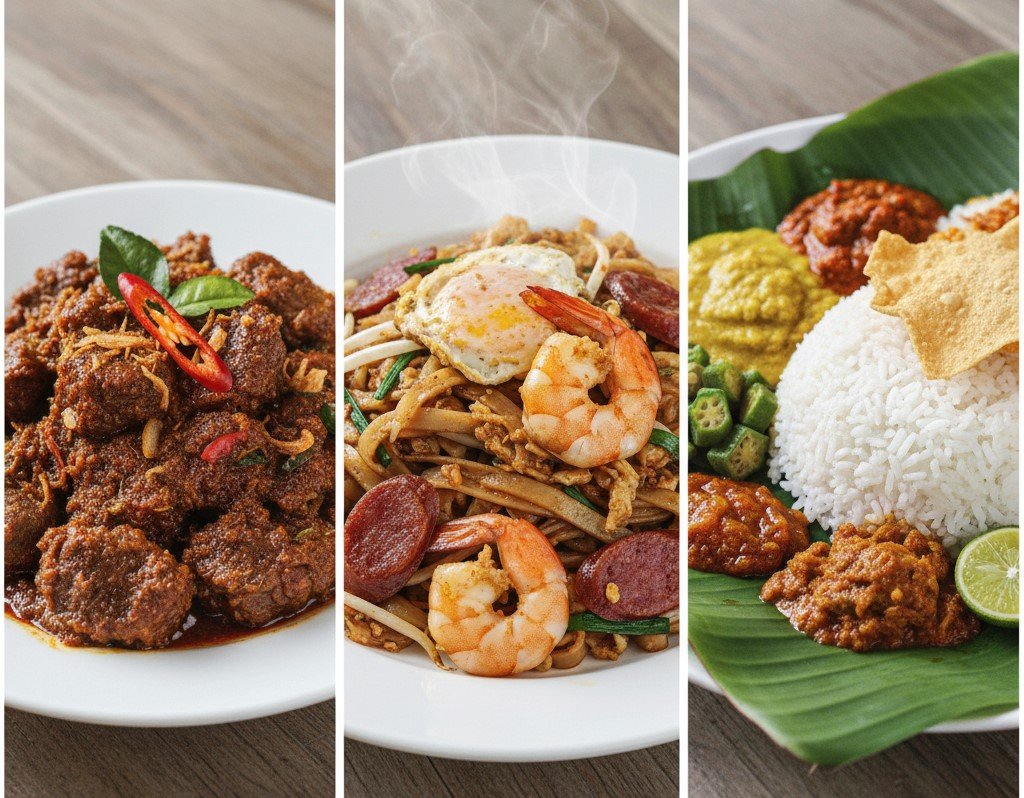
- The National Dish (Nasi Lemak): This is where every traveler should start. It’s not just rice; it’s fragrant rice cooked in rich coconut milk and pandan leaves. It comes with crunchy fried anchovies (ikan bilis), peanuts, cucumber, and a dollop of sweet-spicy sambal. It’s the perfect cultural benchmark.
- Rendang: The Slow-Cooked Perfection: Often mistaken for a curry, Rendang is a dish of meat (usually beef or chicken) slow-cooked over hours until the liquid evaporates, leaving the meat tender and coated in a dry, intensely aromatic paste of toasted coconut (kerisik) and spices. It’s a dish of celebration and incredible depth.
Chinese: The Mastery of the Wok (Wok Hei)
When you see a hawker expertly flipping noodles over a roaring flame, you are witnessing the Chinese Malaysian influence. This tradition introduced high-heat cooking techniques and staple ingredients that quickly became integral to the street food scene.
- Char Kway Teow: The Smoky Noodle: This iconic dish—flat rice noodles stir-fried with prawns, cockles, Chinese sausage, egg, and bean sprouts—is defined by wok hei, or the “breath of the wok.” This essential smoky aroma, achieved only by cooking on scorching hot iron woks, is the addictive factor that brings travelers back for more.
- Hainanese Chicken Rice: A surprisingly simple yet masterful dish: tender poached chicken served with rice cooked in chicken broth and a punchy chili-ginger dipping sauce. It’s comfort food fusion at its finest.
Indian: Roti, Curry, and the Art of Banana Leaf Rice
The Indian Malaysian tradition brought flaky flatbreads and the complex, gravy-rich curries found at the ubiquitous Mamak stalls (Indian Muslim eateries).
- Roti Canai: A travel rite of passage. This flaky, crispy flatbread is expertly stretched and slapped before being fried on a griddle and served hot with a side of lentil dhal or a rich chicken curry. It is the quintessential Malaysian breakfast or late-night snack.
- Banana Leaf Rice: A beautiful communal meal. Rice is served directly onto a banana leaf (which acts as a disposable, natural plate), followed by an array of vegetarian curries, vegetables, and crisps (papadum). Eating it with your hand is part of the joyous experience.
The Must-Eat Dish That Redefines Southeast Asia: Curry Laksa
While all these individual cuisines are fantastic, the one dish that truly captures Malaysia’s identity—the dish that will change how you view the region—is the Curry Laksa.
It is the physical, edible manifestation of the cultural diversity of the nation.
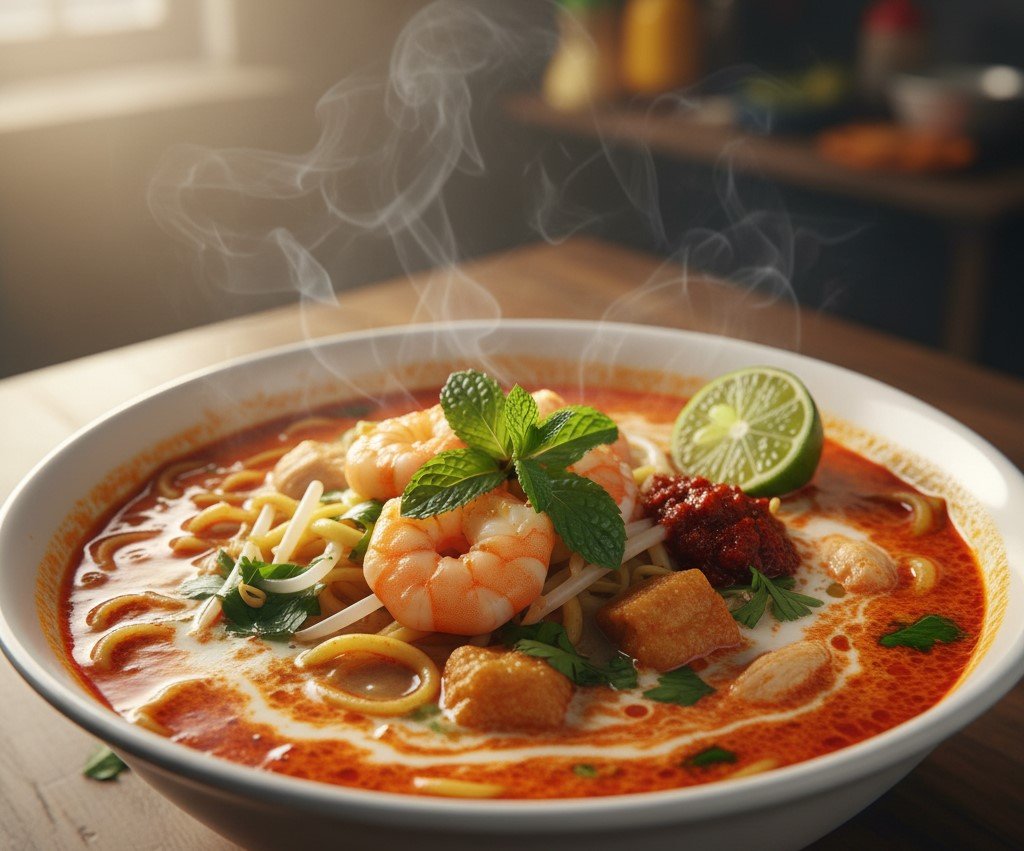
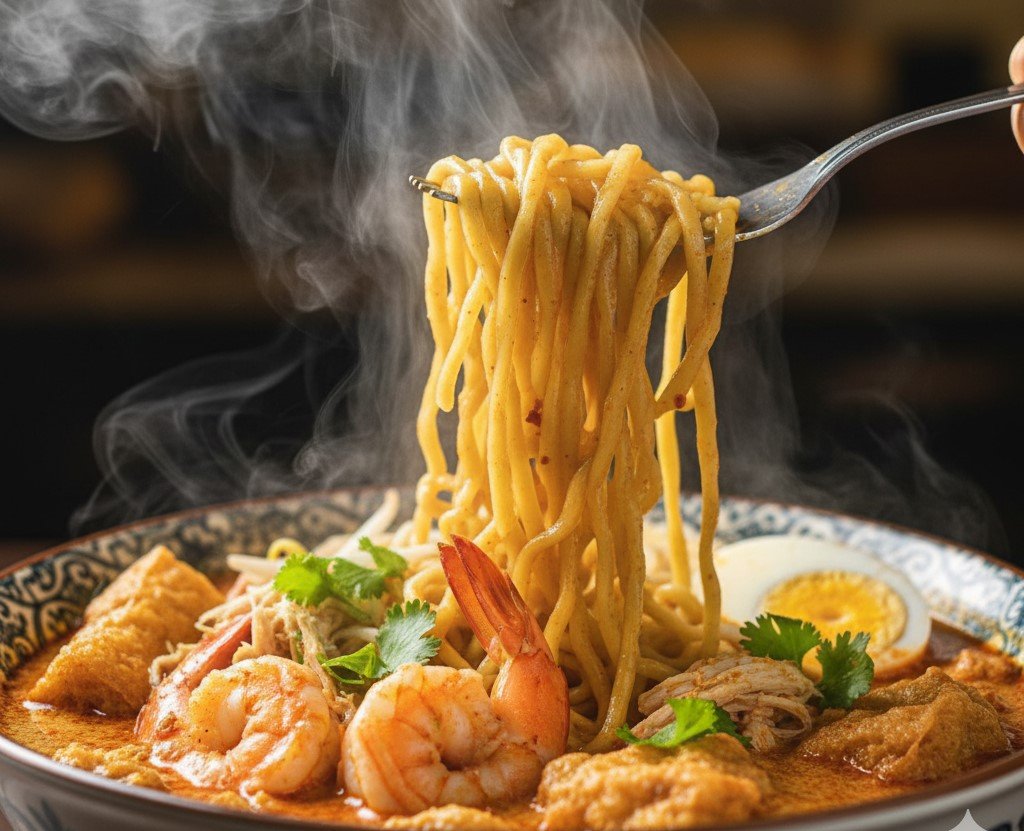
Imagine a soup base so rich it tastes like a coconut curry, so spicy it commands attention, and so savory it’s utterly addictive. It starts with a classic Chinese-style egg noodle base, is bathed in a creamy, red-orange broth made from Malay coconut milk and spices, and topped with ingredients like tofu puffs (which soak up the broth), shredded chicken, and fresh mint leaves.
It is proof that the three culinary forces can come together in a singular, explosive, and harmonious flavor. Many call it the most perfectly balanced bowl in Asia—a true unique Asian food experience.
Finding the Flavor: Your Guide to the Best Malaysian Food Experiences
To truly appreciate Malaysian cuisine, you must step off the beaten path and into the social fabric of the dining scene.
The Thrill of the Hawker Stall and Night Market
The best restaurants in Malaysia are often on the street. Hawker stalls and food courts are where generations of cooks have specialized in one or two dishes, perfecting their craft. This is the ultimate Penang street food experience.
- How to Navigate: It might look intimidating, but it’s easy. First, find a table and note its number. Next, walk around the stalls, place your order (telling the vendor your table number), and then sit down. The food is brought directly to you.
- Safety Tip: A golden rule for safety and quality is simple: Follow the locals. If a stall has a long line of people, that high turnover ensures the ingredients are fresh and the food is authentic.
- The Mamak Tradition: These open-air, 24-hour Indian Muslim eateries are social hubs. You can get anything from late-night Roti Canai to a towering Roti Tisu dessert. Don’t forget to order a frothy Teh Tarik (pulled tea)—the way it is “pulled” between two mugs is a form of art.
Regional Specialties: Penang vs. Kuala Lumpur vs. Malacca
Your culinary journey should span the peninsula to experience the regional variations.
| Region | Must-Try Dish | Flavor Profile |
| Penang (George Town) | Asam Laksa | Sharp, tangy, spicy, fish-based (no coconut milk). Arguably the world’s best noodle soup. |
| Kuala Lumpur (KL) | Curry Laksa | Rich, creamy, intense coconut milk broth. Best city for Mamak and late-night street food culture. |
| Malacca (Melaka) | Nyonya Cuisine | A delicate, aromatic fusion of Chinese ingredients with Malay spices (e.g., Ayam Pongteh). |
Beyond the Savory: Unforgettable Malaysian Desserts and Drinks
The sweet side of Malaysian cuisine is just as inventive and refreshing, particularly in the tropical heat.
- Cendol and Ais Kacang: These famous cold desserts are the perfect antidote to the heat. Cendol is shaved ice topped with coconut milk, palm sugar syrup (gula melaka), and bright green, pandan-flavored rice flour jelly. Ais Kacang (literally “mixed ice”) is a mountain of shaved ice topped with sweet beans, corn, syrups, and condensed milk—a vibrant, textural feast.
- Kuih (Traditional Sweets): Look for these colorful, bite-sized traditional sweets made from coconut, rice flour, and palm sugar. They are small, intricate, and a great way to sample the subtle, non-savory use of essential ingredients.
Planning Your Feast: Essential Visa & Travel Tips
Your passport is your golden ticket to this gastronomic paradise. A memorable food trip requires the right paperwork, and checking your travel documents well in advance is essential.
To indulge in this incredible Southeast Asia food experience, you must ensure your entry into Malaysia is smooth.
- Passport Validity: Ensure your passport is valid for at least six months from your date of entry.
- MDAC: Most foreign nationals must complete the Malaysia Digital Arrival Card (MDAC) within three days of their arrival.
- Visa Status: Depending on your nationality, you may require an e-Visa or be eligible for a visa-free stay. Before you book your first Nasi Lemak breakfast, confirm your exact entry requirements.
For the most current information and to begin your application process efficiently, always consult a reliable source.
Ready to Change Your Perspective? Start Your Application Today
Malaysian cuisine is not just food; it is edible history, a cultural lesson served on a banana leaf, and the most delicious argument for global harmony. It will surprise you with its complexity, comfort you with its familiarity, and ultimately change your expectations for all food that follows.
You’ve learned about the flavors, the history, and the must-try dishes. Now, the adventure is calling.
Don’t let the paperwork stand between you and the best Malaysian dishes. Secure your travel documentation now and prepare to experience Southeast Asia in a way you never thought possible.
Start your Malaysian visa application or check your entry requirements today!
Frequently Asked Questions (FAQs)
Q1: What makes Malaysian food different from Thai or Vietnamese cuisine?
Malaysian cuisine is uniquely a triple-fusion of Malay, Chinese, and Indian culinary traditions, resulting in complex, rich flavors using ingredients like coconut milk, fermented shrimp paste (belacan), and turmeric. This contrasts with the lighter, herbal, and more lime-focused profiles typically found in Thai and Vietnamese food.
Q2: What is the single best dish a first-time visitor to Malaysia must try?
The essential, must-try national dish is Nasi Lemak. This fragrant coconut rice, served with sweet-spicy sambal (chili paste), crunchy fried anchovies (ikan bilis), and a hard-boiled egg, perfectly represents the core flavor balance of the country.
Q3: Is Malaysian street food safe for tourists to eat?
Yes, Malaysian street food is generally very safe. The best safety rule is to look for hawker stalls with long lines of locals or high customer turnover, as this indicates both fresh ingredients and a reliable vendor reputation. Always choose food that is cooked to order and served piping hot.
Q4: Which city is considered the food capital of Malaysia?
Penang (specifically George Town) is widely regarded as the food capital of Malaysia, celebrated globally for its vibrant street food culture and iconic regional specialties like Asam Laksa and Char Kway Teow.
Q5: Are there many vegetarian or vegan options in Malaysian cuisine?
Yes, due to the strong Indian and Chinese influence, there are abundant options. Look for dishes like Banana Leaf Rice (which is often vegetarian by default), many vegetable-based curries (sayur lodeh), tofu and vegetable options at Chinese Buddhist vegetarian stalls, and many delicious Roti Canai variations.