
Dreaming of combining world-class medical care with a tropical getaway? Welcome to Malaysia! Ranked as a top global destination for Medical Tourism Malaysia, this vibrant country offers an exceptional quality of care at a fraction of the cost found in Western nations. Whether you’re a tourist seeking affordable dental work or an expat planning for long-term residency, understanding the Malaysian Healthcare System is key to a seamless experience.
This comprehensive guide breaks down the two-tier system, compares the costs, details the visa process, and highlights the best private medical facilities, ensuring you have all the information to access the best private hospitals in Malaysia.
Understanding Malaysia’s Two-Tier Healthcare System
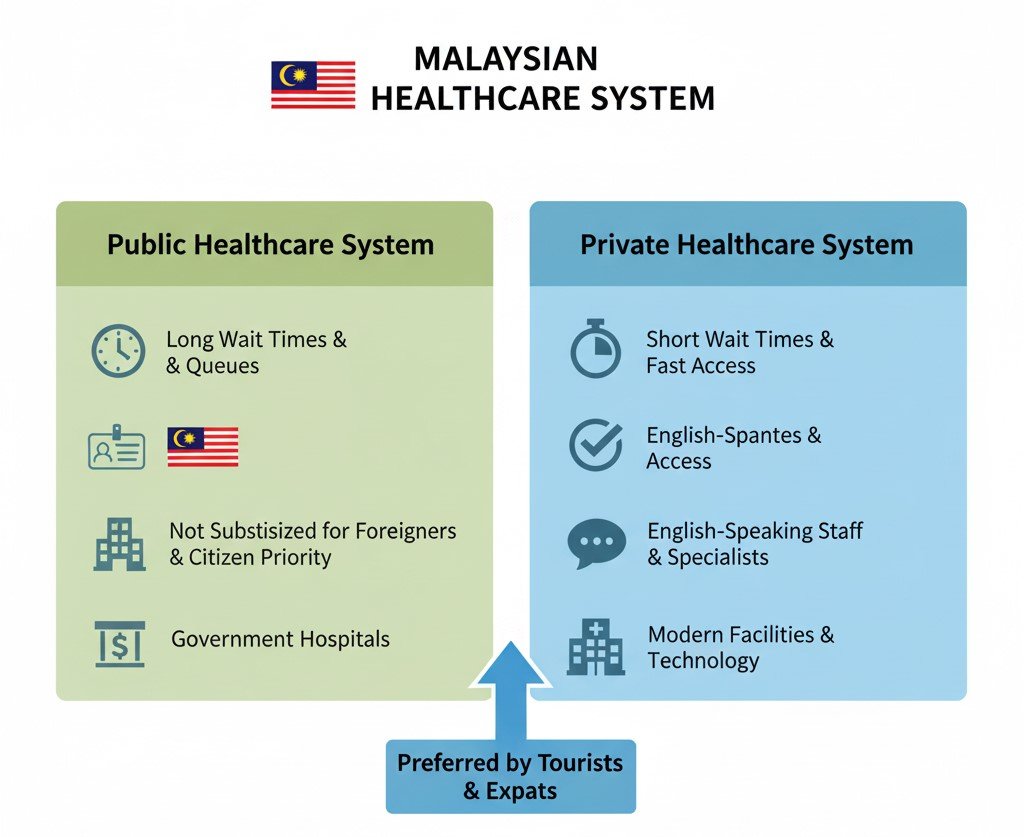
Malaysia operates a distinctive two-tier healthcare system composed of a highly subsidized public sector and a cutting-edge private sector. Both are overseen and regulated by the Ministry of Health (MOH) Malaysia, ensuring high standards across the board.
The Public System: Subsidized Care for Locals
The public health sector is funded by general taxation, providing heavily subsidized services to citizens and permanent residents. In many cases, a visit to a public clinic or hospital can cost citizens just a few ringgit (MYR).
- For Foreigners: While you can technically access the public system, it comes with several caveats:
- Unsubsidized Rates: You will be charged non-citizen rates, which are significantly higher—sometimes 24 to 100 times the local fee—making the final bill comparable to, or even higher than, a private hospital for complex procedures.
- Long Waiting Times: Due to high demand, you can expect long queues for consultations and potentially months-long waits for elective surgeries or specialist appointments.
- Citizen Priority: Priority is always given to Malaysian citizens in public facilities.
The Private System: The Preferred Choice for Foreigners
The private healthcare sector is where Malaysia’s reputation for quality truly shines. Catering primarily to the affluent and international patients, it’s the standard choice for expats and medical tourists.
- Benefits: Enjoy virtually no waiting times, access to direct specialist consultations (no referral needed), top-tier medical technology, and spacious, private rooms.
- Staff: Doctors and specialists in the private sector are highly trained, often having studied in the UK, Australia, or the US, and are typically fluent in English, eliminating any communication issues.
Medical Tourism in Malaysia: A Global Benchmark
Malaysia has cemented its position as a world leader in medical travel, recognized for its clinical excellence, cultural diversity, and value for money. Patients flock here from Indonesia, Singapore, Australia, the Middle East, and the West.
The Cost Advantage: Quality Without the Price Tag
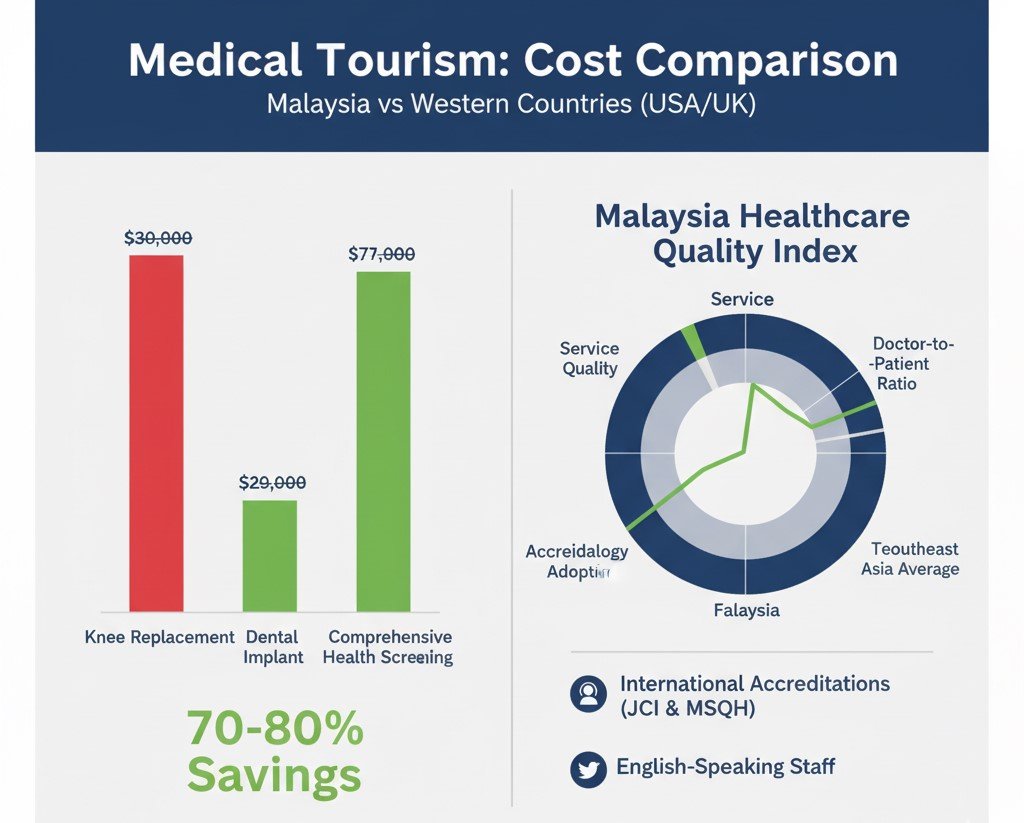
The most compelling draw is the cost of treatment in Malaysia. Major procedures are often 50-80% cheaper than in the United States or the UK, with no compromise on quality.
| Procedure (Example Estimate in USD) | Western Countries (USA/UK) | Malaysia (Private Hospital) | Savings |
| Knee Replacement | $30,000 – $50,000+ | $7,000 – $12,000 | 70-80% |
| Angioplasty (Single Stent) | $15,000 – $25,000+ | $4,000 – $8,000 | 60-80% |
| Comprehensive Health Screening | $500 – $2,000 | $100 – $300 | 70-85% |
| Routine Dental Check-up & Cleaning | $150 – $300 | $25 – $50 | 80%+ |
Top Accredited Hospitals & Specializations
Many top Malaysian hospitals hold the prestigious Joint Commission International (JCI) accreditation, the “gold standard” for healthcare globally. Major medical hubs include Kuala Lumpur, Penang, and Melaka.
- Cardiology: The National Heart Institute (IJN) and major private groups excel in cardiac care, including complex bypass surgeries and angioplasties.
- Fertility (IVF): Malaysia is internationally recognized for its high success rates and ethical standards in fertility treatments.
- Oncology: Hospitals like Gleneagles and Sunway Medical Centre offer cutting-edge cancer treatment, often featuring advanced linear accelerators and robotic surgery options.
- Orthopaedics: Highly popular for joint replacement surgeries (hip and knee) and spinal procedures.
- Health Screening & Aesthetics: Wide availability of affordable, comprehensive check-up packages and cosmetic procedures.
Navigating Healthcare Costs: What Expats Need to Know
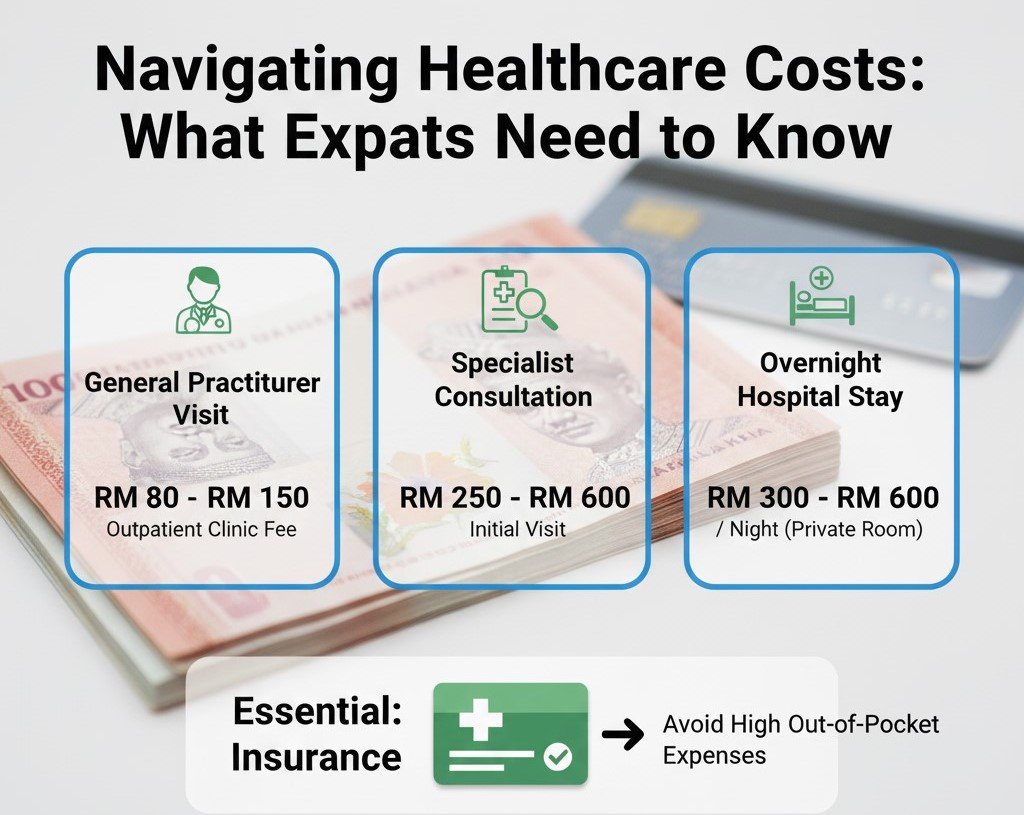
If you’re an expat, understanding your out-of-pocket expenses is crucial. While Malaysia’s private system is cheaper than the West, the costs quickly add up without insurance.
Average Costs for Common Services
Here’s a rough guide to the cost of services at a reputable private clinic or hospital (excluding medication):
- General Practitioner (GP) Visit: RM 80 – RM 150 (approx. USD 17 – USD 32)
- Specialist Consultation (First Visit): RM 250 – RM 600 (approx. USD 54 – USD 130)
- Emergency Room Visit (excluding procedure): Starts from RM 150
- Hospital Ward Fee (Private Room per night): RM 300 – RM 600
The Essential Role of Health Insurance for Expats
While you are not legally required to have health insurance for a standard visa, it is highly recommended. Relying solely on the public system means accepting long waits and paying the high non-citizen rates, while paying for private care out-of-pocket can drain your savings quickly.
- Recommendation: Look for an international health insurance plan that offers direct billing with major private hospitals (like Pantai Hospital or KPJ Healthcare), ensuring a smooth, cashless experience.
Quick Access: Getting Your Malaysia Medical Visa & Entry
For many nationalities, entry for short stays (under 30 days) is straightforward, but for medical travel, ensuring the correct entry documents is vital.
The Malaysia eVisa system offers a streamlined, fully online application process for eligible travelers coming for tourism, business, or medical purposes. Using a trusted and specialized visa application service can greatly simplify this first step of your journey.
Travel Tip: Secure your travel documents hassle-free. If you are preparing for your trip or arranging specialized medical appointments, obtaining the correct visa is the first step. For a quick and secure application for your Malaysia eVisa, you can visit https://applymalaysiavisa.com/. We help ensure your documentation is compliant so you can focus on your health.
Conclusion: Your Health Journey Starts Here
Malaysia stands out not just as a beautiful travel destination, but as a global powerhouse in quality, affordable medical care. The country offers a safe, professional, and English-friendly environment that makes seeking treatment or living as an expat a smooth experience. By choosing the private health Malaysia sector and securing the appropriate travel documents through services like applymalaysiavisa.com, you can tap into one of the world’s most accessible and well-regarded Malaysia Medical Care options.
Frequently Asked Questions (FAQs)
Q1: Is healthcare in Malaysia free for foreigners or tourists?
No, healthcare in Malaysia is not free for non-residents. While Malaysian citizens benefit from heavily subsidized rates in the public system, foreigners are charged the full, unsubsidized fee. Tourists and expats are advised to use private facilities and carry comprehensive travel or health insurance.
Q2: How is the quality of doctors and hospitals in the private sector?
The quality is considered world-class. Many Malaysia Hospitals are JCI or MSQH accredited, feature modern technology, and employ specialist doctors often trained in Western medical schools. The overall standard is comparable to healthcare in the US, UK, or Australia, but at a significantly lower cost of treatment in Malaysia.
Q3: Do I need a special visa for medical treatment in Malaysia?
In most cases, foreigners can enter Malaysia for a short medical stay (usually up to 30 days) using a standard tourist visa or an eVisa, depending on their nationality. However, it is essential to have an appointment letter from the registered Malaysian hospital and ensure your visa type covers your intended length of stay.
Q4: How long do I have to wait for an appointment with a specialist?
In the private health Malaysia sector, waiting times are typically very short. You can often get an appointment with a specialist within a few days, or sometimes even the same day, which is a major advantage over the overloaded public system.
Q5: Are prescriptions and medications cheaper in Malaysia?
Yes. The retail price for prescription drugs and over-the-counter medication is generally much cheaper in Malaysia compared to prices in many Western countries. Pharmacies are widely available and well-stocked.