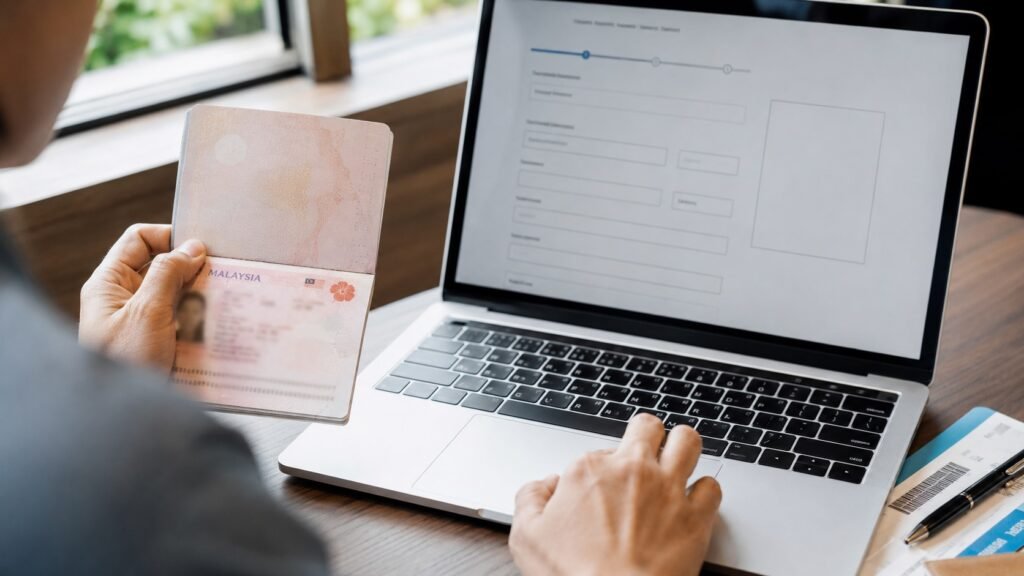
If you’re searching for a fast Malaysia visa online, you’re probably staring down a travel date and wondering if you’ll make it in time. Here’s the honest answer: a standard Malaysia eVisa typically takes 2 to 5 business days to process once it’s submitted correctly. That window doesn’t include weekends or Malaysian public holidays, so a Friday application can easily slip past the weekend.
The word “fast” gets thrown around a lot in this space, and it’s worth being clear about what it can and can’t mean. No service, including ours, can override how quickly Malaysia’s Immigration Department reviews an application. What actually determines your speed is whether your application is correct the first time. Most delays aren’t caused by slow government processing. They’re caused by avoidable mistakes: a photo that doesn’t meet spec, a name that doesn’t match your passport exactly, or the wrong visa category selected from the start.
This guide walks through the real timeline, the documents you need, the mistakes that cause the most hold-ups, and how to decide whether to handle this yourself on the official portal or get help with it.
Malaysia eVisa vs. Malaysia Digital Arrival Card (MDAC): Don’t Mix These Up
Before anything else, it helps to separate two things that get confused constantly: the eVisa and the MDAC.
The Malaysia eVisa is your actual permission to enter the country. If your nationality requires a visa for tourism, business, or a social visit, this is the document you need approved before you travel.
The Malaysia Digital Arrival Card (MDAC) is a separate, mandatory arrival declaration. Every foreign visitor has to complete it, typically within three days before landing in Malaysia, regardless of whether they need a visa or come from a visa-exempt country. Think of it as a digital version of the old paper arrival card, not a substitute for a visa.
Here’s the part that trips people up: having one does not excuse you from the other. If you need a visa, you need both the eVisa and the MDAC. Skipping the MDAC because you already have a visa is a common and completely avoidable mistake.
| Malaysia eVisa | Malaysia Digital Arrival Card (MDAC) | |
|---|---|---|
| Purpose | Grants permission to enter Malaysia | Declares your arrival details to immigration |
| Who needs it | Nationals from visa-required countries | All foreign visitors, including visa-exempt nationals |
| When to apply | Before booking is finalized, ideally weeks ahead | Within 3 days of arrival |
| Does one replace the other? | No | No |
How Long Does a Malaysia eVisa Actually Take?
Processing times vary depending on your nationality and visa category, but here’s a realistic picture based on official guidance:
- Standard processing: 2 to 5 business days, not counting weekends or Malaysian public holidays
- Visa with Reference (VDR) categories (used for employment passes, professional visit passes, dependent passes, and similar): often takes longer because it depends on an approval letter issued before you even apply for the eVisa
- Unexpected delays: system maintenance, incomplete documentation, or a flagged photo can add days on top of the standard window
If you’re flying within 48 hours, be realistic with yourself. Standard processing was never designed to move that fast. Some assisted services, ours included, can help make sure everything is submitted correctly and check whether any expedited option applies to your specific nationality and visa type, but nobody can promise a same-day government decision. Be wary of any service that guarantees approval or a fixed turnaround, since Malaysia’s Immigration Department reserves the right to review every application on its own merits and can request more information at any stage.
What You Need Before You Start
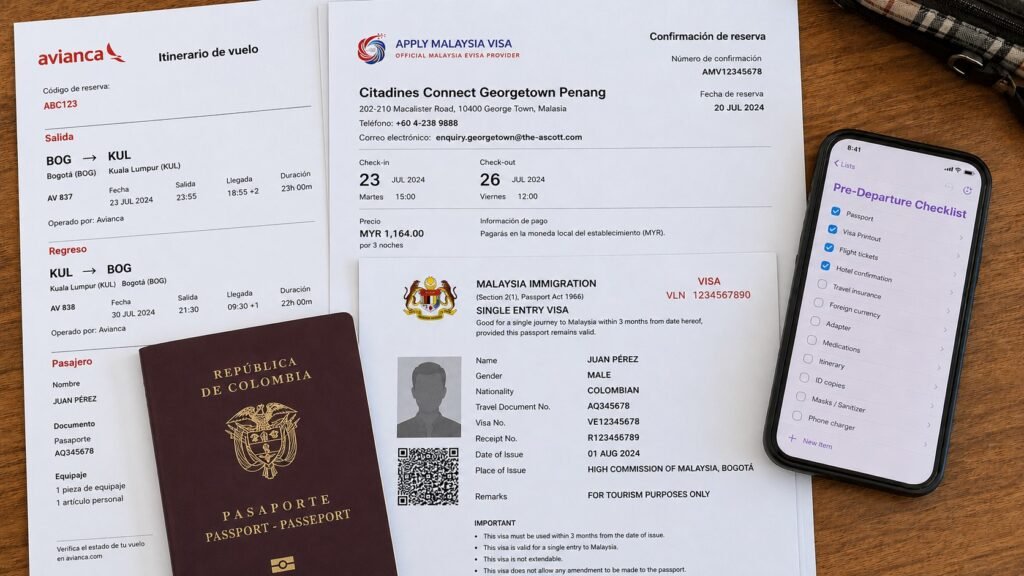
Having everything ready before you open the application form is the single biggest thing you can do to avoid delays. Here’s the checklist:
- Passport with at least 6 months of validity remaining from your date of entry, with blank pages available
- A recent passport-style photo meeting the official specifications (more on this below, since it’s the most common failure point)
- Confirmed return or onward flight ticket
- Proof of accommodation in Malaysia, such as a hotel booking or an invitation letter if you’re staying with someone
- Bank statement covering the last 3 months, if requested for your category
- Letter of invitation from a local entity, required if you’re applying for a Multiple Entry Visa (MEV)
- Approval letter (VDR), required in advance if you’re applying under an employment, professional, dependent, or similar pass category
Additional documents may be requested depending on your nationality, so it’s worth checking the requirements for your specific country before submitting.
The Photo Problem: Why This Trips Up So Many Applicants
If there’s one thing worth spending extra time on, it’s your photo. This is consistently the top reason eVisa applications get flagged or sent back.
The requirements are specific: a plain white or blue background with no gradients, patterns, textures, or shadows. No glasses. No accessories. Studio-quality resolution, not a phone selfie against a wall. As of July 2026, the official MyVISA portal has activated automated photo validation for eVisa applications under the VDR category, meaning uploads are checked against these specs before a human even sees them. A photo that fails this check gets referred back, which costs you time you probably don’t have if you’re traveling soon.
If you’re applying close to your travel date, it’s worth getting your photo checked against the current specifications before you submit, rather than finding out it failed after the fact.

Common Reasons Applications Get Delayed or Rejected
Beyond the photo, a few other issues account for most of the hold-ups people run into:
Name mismatches. If your name on the application doesn’t match your passport exactly, down to spacing and middle names, it can trigger a manual review or rejection.
Wrong visa category. Tourist, social visit, VDR, student, and medical categories all have different document requirements. Picking the wrong one means starting over.
Incomplete supporting documents. Missing a bank statement, invitation letter, or proof of accommodation when your category requires it is one of the most common reasons for a “KIV” (Keep In View) status, which means an officer needs more from you before they can proceed.
Blurry or low-resolution passport scans. If the immigration officer can’t clearly read your passport details, expect a request for a better scan.
A rejection generally means reapplying and paying the fee again, so it’s worth getting the details right the first time rather than rushing.
DIY vs. Assisted Application: How to Decide
You have two honest paths here, and neither one is wrong.
Apply directly through the official portal at https://applymalaysiavisa.com if you’re comfortable navigating forms, have time to spare before your trip, and are confident about the photo specifications and document requirements for your category.
Use an assisted service if you’d rather have someone double-check your documents and photo before submission, especially if you’re applying close to your travel date and can’t afford a rejection cycle. An assisted service can’t speed up how fast Malaysia’s Immigration Department reviews your file, but it can catch the errors that cause most delays before they become a problem.
Either way, be cautious of any site that isn’t clear about the distinction between processing and their own service. The only official portal is application.applymalaysiavisa.com. If you apply through a third party, your application still goes through the same government review, and the immigration department has noted that applying through non-official channels carries risk on the applicant’s part, so it’s worth knowing exactly what a service is offering before you pay for it: usually document review and submission support, not a shortcut around government approval.
Before You Travel: Print It Out
Once your eVisa is approved, print it on A4 paper. Immigration officers at Malaysian checkpoints often require a physical copy to stamp on entry, so don’t rely solely on showing it from your phone, even though digital copies are generally accepted as backup.
And don’t forget the MDAC. Complete it within three days of your arrival date, separately from your visa application.
Quick Pre-Departure Checklist
- Passport valid for 6+ months with blank pages
- Photo meets current background and resolution specifications
- Correct visa category selected for your purpose of travel
- All required supporting documents uploaded (flight ticket, accommodation, bank statement, invitation letter if applicable)
- Name on application matches passport exactly
- eVisa approval received and printed on A4 paper
- MDAC completed within 3 days of arrival
Getting Started
If you’d rather not second-guess your photo specs or document list the night before a flight, our team at Apply Malaysia Visa can review your application before it goes in, so you’re not finding out about a mistake after it’s already cost you a few days. Start your Malaysia eVisa application or check your visa requirements by nationality first if you’re not yet sure whether you need one.