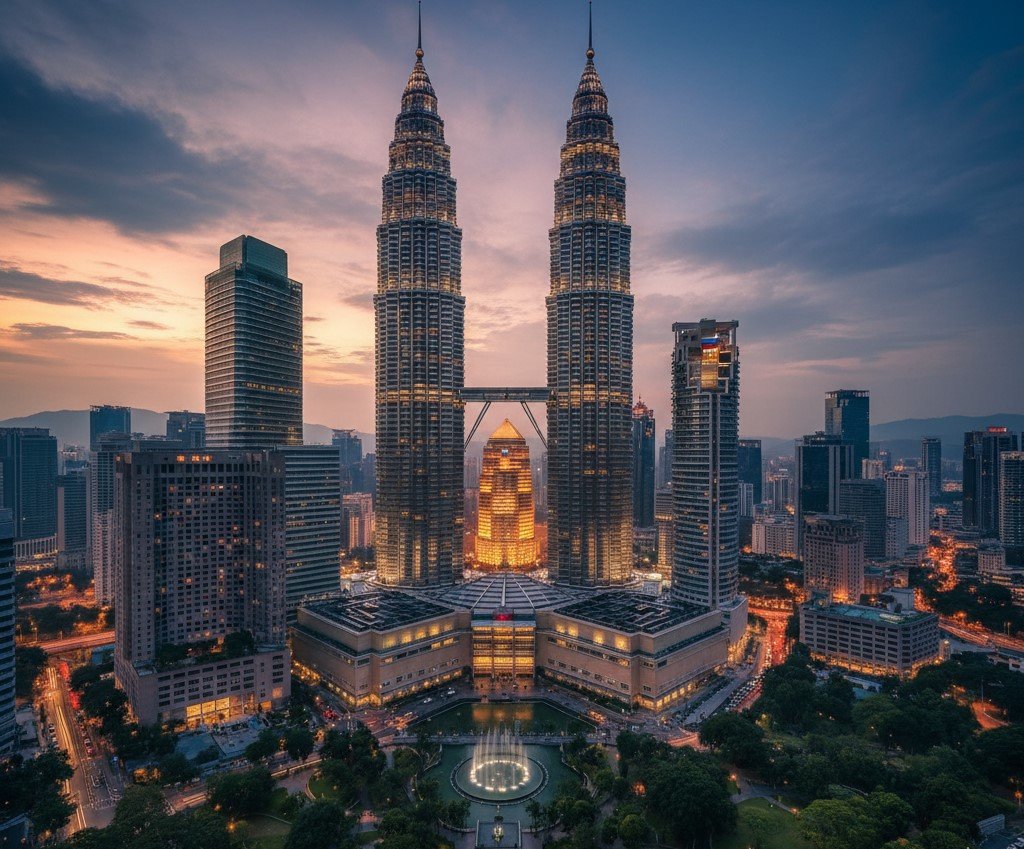
Kuala Lumpur (KL) is a dizzying, delightful, and delicious hub of Southeast Asia—a modern metropolis where futuristic skyscrapers stand alongside ancient temples. But planning your perfect Malaysian adventure requires understanding one key factor: the tropical climate Malaysia is famous for.
The truth is, there’s no single “bad” time to visit KL. However, knowing the KL weather by month, which festivals are happening, and when you can expect peak travel months KL will transform your trip from good to incredible.
This comprehensive guide breaks down everything you need to know about the weather patterns, the most exciting cultural events, and the visa logistics (including a crucial note about your Malaysia eVisa) to help you choose the absolute best time to visit Kuala Lumpur (KL).
Kuala Lumpur’s Tropical Climate: A Year-Round Breakdown
Kuala Lumpur sits almost right on the equator, giving it a true equatorial climate. This means two things are constant: high temperatures and high humidity. Forget seasonal wardrobes; in KL, every day feels like summer.
Temperature & Humidity: Expect Consistent Heat
The average temperature in Kuala Lumpur is incredibly stable, typically hovering between 27°C and 33°C (81°F and 91°F) year-round. This makes planning easy, but the real variable is the moisture. The average humidity levels often sit above 80%, making even a short walk feel like a workout.
The sunniest periods, perfect for exploring KLCC Park or the vibrant street art of Bukit Bintang, are generally found when the rain is at its lowest.
Understanding the Monsoons and Rainfall Patterns
While the capital is somewhat protected, it does experience heavier rainfall tied to the monsoon seasons. However, the term “monsoon” in KL often doesn’t mean non-stop rain for days on end.
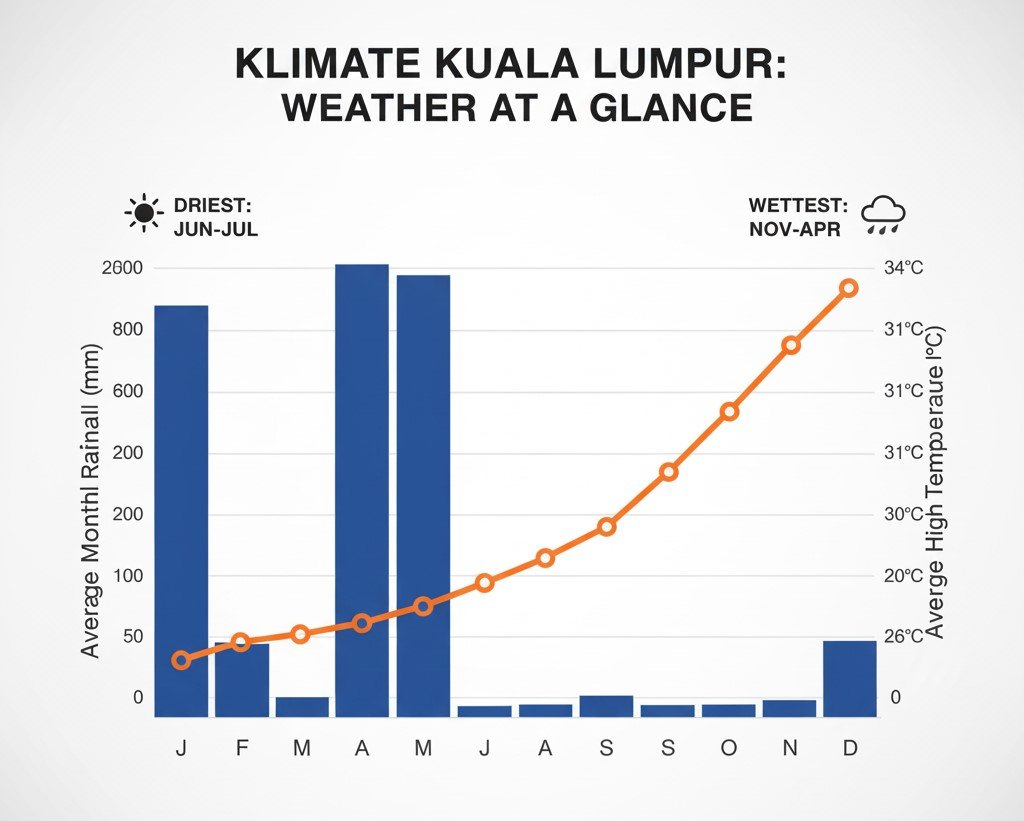
- Wettest Months: October to December and March to April see the highest KL annual rainfall totals.
- The Reality of Tropical Showers: Rain usually falls in intense, but short-lived, heavy tropical downpours lasting one to two hours, typically in the late afternoon or evening. This pattern means you can plan for clear mornings and early afternoons for sightseeing.
If you don’t mind carrying an umbrella or ducking into one of the city’s massive shopping malls when the rain starts, the monsoon season KL can be a rewarding time to visit due to fewer crowds and lusher landscapes.
The Absolute Best Time to Visit KL for Your Goals
The “best” time depends entirely on what kind of traveler you are. Are you an explorer obsessed with dry weather, a budget traveler hunting for deals, or a culture seeker chasing festivals?
Best for Sightseeing & Outdoor Activities (The Dry Spot: June – August)
If your priority is spending as much time outdoors as possible—visiting the Batu Caves, walking the KL Forest Eco Park, or enjoying the panoramic views from a rooftop bar—then the months of June and July are your sweet spot.
This period sees the lowest average rainfall and the most sunshine hours, providing the most reliable weather for long days of exploration. This is the driest months Kuala Lumpur experiences, but be prepared for peak-season flight and hotel prices.
Best for Budget Travelers & Avoiding Crowds (Shoulder Season: March & September)
If you are looking for the sweet spot that balances weather and cost, target the shoulder season KL: March, September, and early October.
- Why it’s great: You can find better deals on accommodation, and you’ll avoid crowds Kuala Lumpur experiences during the major holiday rushes.
- The Trade-off: You will face slightly higher humidity and an increased chance of those afternoon thunderstorms. This is the perfect time for indoor cultural activities, such as exploring the Islamic Arts Museum Malaysia.
Best for Festive Experiences & Shopping (Peak Season: December – February)
This is the high-energy season, driven by a spectacular convergence of global and local holidays.
- December: Bustling with Christmas and New Year cheer, attracting travelers looking for a warm winter escape.
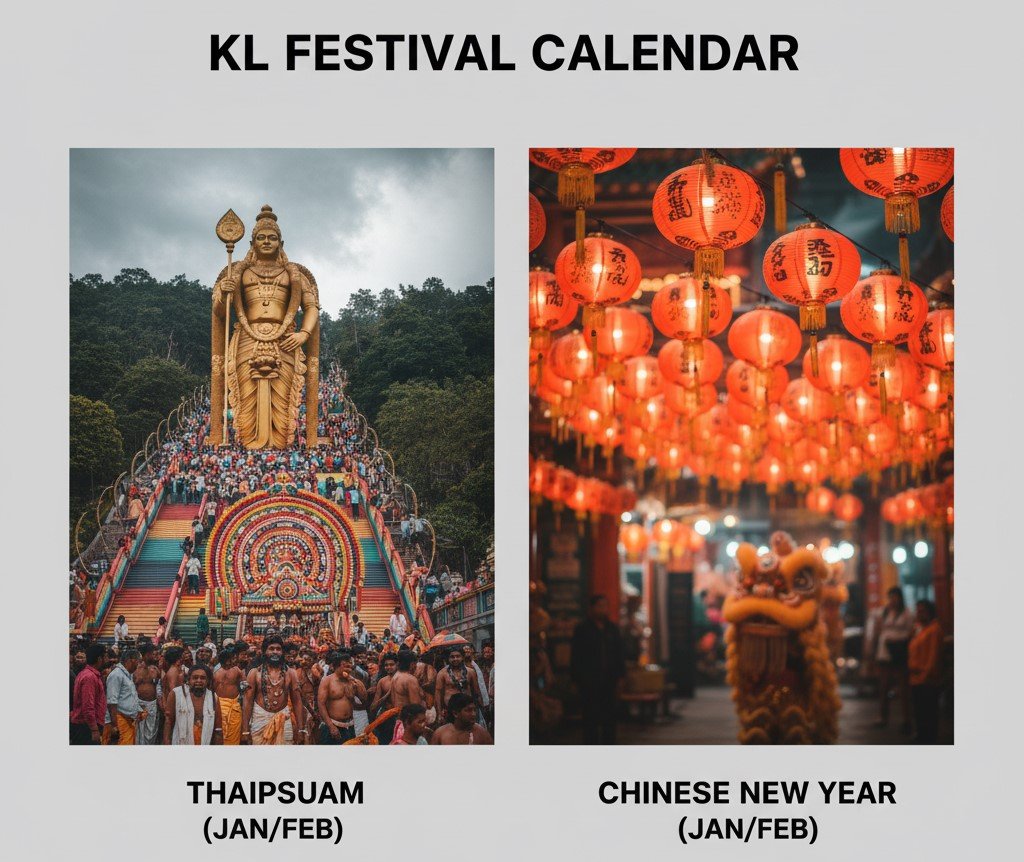
- January/February: The season explodes with two of Malaysia’s biggest celebrations: Chinese New Year (date varies) and the incredible Hindu festival, Thaipusam. The city is loud, colorful, and packed—a truly unforgettable experience if you thrive on energy, but expect the highest prices and busy attractions.
Kuala Lumpur Festivals: Plan Your Trip Around Culture
KL’s multicultural fabric comes alive during its festivals. Timing your trip to coincide with one of these events is the fastest way to immerse yourself in Malaysian culture.
Thaipusam (Jan/Feb): A Stunning Spectacle at Batu Caves
Held annually on the full moon in the Tamil month of Thai (late January or early February), Thaipusam is a mesmerizing Hindu festival of devotion. The grandest celebration takes place at the Batu Caves complex, just north of the city. Witnessing the massive procession of devotees carrying ornate kavadis is a powerful, visually stunning, and unforgettable experience.
Chinese New Year (Jan/Feb): The Roar of the Lion Dance
The Lunar New Year brings two weeks of vibrant celebrations. Streets, particularly in Chinatown (Petaling Street), are decorated with red lanterns, and malls host spectacular lion dances. While some small, family-run shops might close for a few days, the celebratory atmosphere, firecracker displays, and endless feasts make this one of the most exciting times to be in the city.
Hari Raya Aidilfitri (Date Varies): Unity and Open Houses
Marking the end of the fasting month of Ramadan (dates shift based on the Islamic lunar calendar), Hari Raya is a time for family reunion. The tradition of “Open Houses,” where Malaysians invite friends, neighbors, and even tourists into their homes for a feast, offers a rare, intimate glimpse into the local way of life. The city center may be quieter as many locals travel back to their hometowns (balik kampung).
Deepavali (Oct/Nov): The Festival of Lights
Falling in the Hindu month of Kartika (October or November), Deepavali is the Festival of Lights, celebrating the triumph of light over darkness. Brickfields, KL’s Little India, explodes in color, light, and the scent of incense and traditional sweets.
Essential Planning: Visa, Costs, and Logistics
Once you’ve chosen your dates based on the Kuala Lumpur climate and festivals, it’s time to finalize the essential travel logistics.
Tourist Seasons and Impact on Pricing
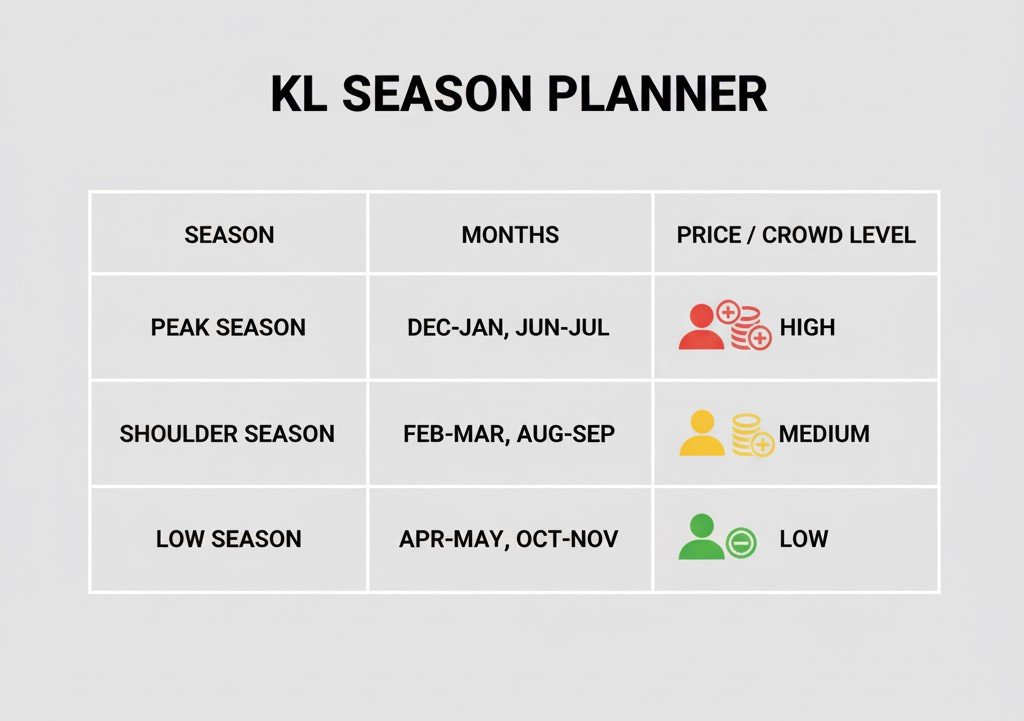
Understanding the tourist seasons will help you snag the best deals:
| Season | Months | Price & Crowd Level | Experience Highlights |
| Peak Season | December, January, June, July | High | Best weather for sightseeing, major holidays (Christmas, CNY, Thaipusam). |
| Shoulder Season | February, March, August, September | Medium | Manageable crowds, better hotel and cheapest time to fly to Kuala Lumpur deals. |
| Low Season | April, May, October, November | Low | Highest rainfall (often short bursts), best deals for budget travelers. |
Expert Tip: The cheapest month to book accommodation often aligns with the Low Season, particularly November, which is a key period for heavy rain. If you plan activities around KL’s world-class indoor attractions, the savings can be substantial.
Visa Requirements: Getting Your Malaysia eVisa
Regardless of the time of year you plan to travel, confirming your entry requirements is the most critical logistical step. Many nationalities are eligible to apply for a Malaysia eVisa online. This digital process saves you the time and hassle of visiting an embassy.
Before you book your flights, ensure your travel documents are ready. For a quick, secure, and easy online application, visit https://applymalaysiavisa.com/ to secure your Malaysia eVisa for tourism, study, or other purposes.
Having your eVisa confirmed well in advance avoids potential delays and ensures a smooth entry at your port of arrival.
Final Verdict: Finding Your Sweet Spot
The best time to visit Kuala Lumpur is genuinely year-round, but the period from May to August offers the lowest rainfall and the most blue skies for pure sightseeing.
However, if you’re a culture enthusiast, aiming for January or February to experience the kinetic energy of Chinese New Year and Thaipusam, despite the possibility of heavy rain, is well worth the trade-off.
Ultimately, KL’s resilience and its excellent infrastructure (covered walkways, comprehensive train system, fantastic indoor attractions) mean that even if you face an intense tropical downpour, your travel plans won’t be ruined—they’ll just be redirected to a fantastic indoor Hawker Centre or one of the city’s luxurious mega-malls.
Frequently Asked Questions (FAQs)
1. What is the driest month to visit Kuala Lumpur?
The months of June and July are consistently the driest months Kuala Lumpur experiences, with the lowest average rainfall and highest number of sunshine hours, making them ideal for outdoor attractions and day trips.
2. When is the most budget-friendly time to travel to KL?
The most budget-friendly time is the low season, specifically October and November, as these months see heavy rain, leading hotels and airlines to offer the biggest discounts to attract visitors.
3. Should I avoid the monsoon season in Kuala Lumpur?
No, you do not need to avoid it. The Kuala Lumpur monsoons typically manifest as heavy, short-lived thunderstorms in the late afternoon. They rarely cause all-day washouts and often provide a welcome cooling effect, while also allowing you to enjoy lower prices and fewer crowds.
4. How far in advance should I apply for a Malaysia eVisa?
It is highly recommended to apply for your Malaysia eVisa at least 14 days before your intended travel date. This ensures ample time for processing, which you can easily do online through services like https://applymalaysiavisa.com/.
5. Is it too hot to visit Kuala Lumpur in May?
May is one of the hottest months of the year, with high temperatures and high humidity. While manageable, plan outdoor activities for the morning or late afternoon, and dedicate the midday hours to exploring air-conditioned museums, malls, and indoor markets.