Hiring foreign talent in Malaysia often feels like a bureaucratic trap. You need workers on the floor yesterday. Instead, you face mounting paperwork, changing regulations, and costly delays. One simple error can reset a three-month waiting period.
We broke down the exact government requirements for 2026. Follow these eight clear steps to secure your workforce legally and keep your operations moving.
A Quick Summary of the 8-Step Approval Process
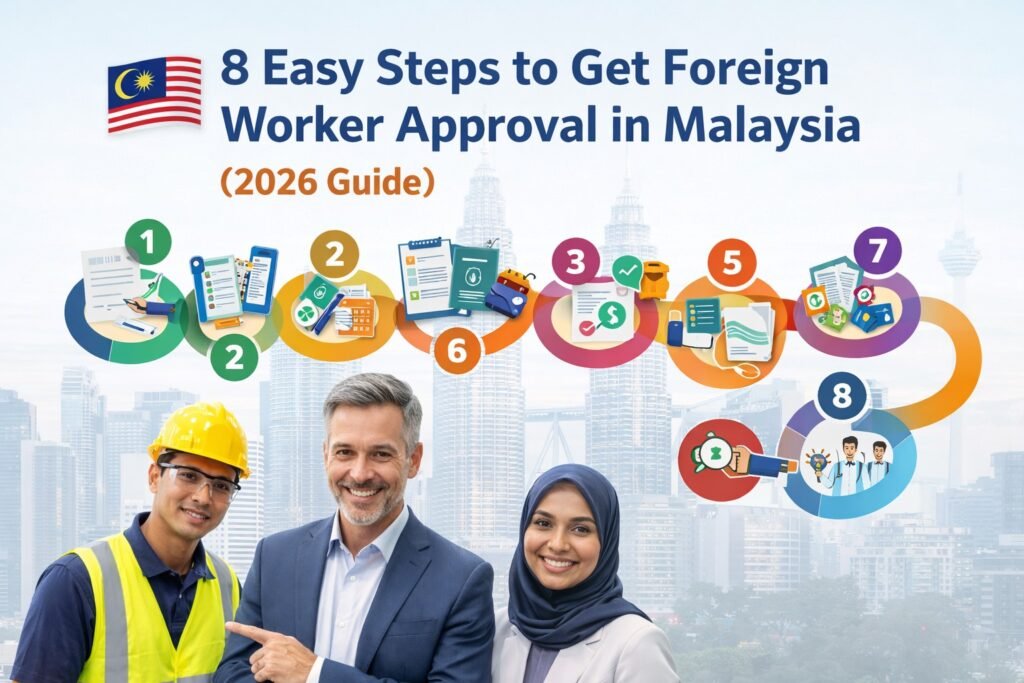
Getting foreign worker approval Malaysia 2026 takes about three to five months. Executive planning requires knowing the exact sequence. Here is the complete process from start to finish:
- Post jobs locally on MyFutureJobs for 30 days.
- Obtain JTK approval (Section 60K clearance).
- Secure your foreign labor quota from KDN.
- Pay the sector-specific levy.
- Source candidates and conduct pre-flight health checks.
- Apply for the Visa With Reference (VDR).
- Clear the Immigration Department of Malaysia at the airport and pass FOMEMA.
- Finalize the Temporary Employment Pass (PLKS).
Step 1: The Mandatory 30-Day Local Hiring Test
The Malaysian government protects the local workforce first. You cannot simply look overseas on day one. You must prove you tried to hire locally.
Employers must post job vacancies on the MyFutureJobs portal. The listing must stay active for exactly 30 days. If no local candidates qualify, you can proceed to the Department of Labour (JTK).
Step 2: Securing Your Section 60K Clearance
You finished the 30-day test. Now you need official permission to hire abroad. You must submit a Section 60K application.
This step proves your compliance with local labor regulations. Getting this JTK approval Malaysia requires strict documentation. You must show proof of safe housing and clean legal standing.
Step 3: Applying for Your Foreign Worker Quota
With JTK clearance in hand, you approach the Ministry of Home Affairs (KDN). You will submit this application through their One Stop Centre (OSC).
This is where you request your specific foreign labor quota. You must justify the exact number of workers your business needs to function. Approval depends on your sector and company size.
Step 4: Paying the Sector-Specific Levy
Quota approval is not free. You must submit a levy payment to lock in your numbers. You have a very short window to settle this bill.
The exact cost depends entirely on your sector approval. Failing to pay this on time voids your entire quota application.
Step 5: Candidate Sourcing and Pre-Flight Medicals
You finally have the green light to hire. You must choose candidates from an approved source country. You can hire directly or use a recruitment agency.
Always demand a basic medical screening before they board a plane. This prevents costly repatriation if they fail tests later.
Direct Hiring vs. Licensed Recruitment Agency
| Feature | Direct Hiring | Licensed Recruitment Agency |
| Cost | Lower upfront fees. | Higher fees (service charges apply). |
| Time Investment | High. You handle all paperwork. | Low. The agency manages the legwork. |
| Risk Control | You must monitor all deadlines. | Agency guarantees compliance. |
| Best For | Experienced internal HR teams. | Founders needing fast, hands-off results. |
Step 6: Getting the Visa With Reference (VDR)
Your workers are ready. Now you must apply for a VDR visa Malaysia. You submit this to the Immigration Department of Malaysia.
You will need your quota approval, levy receipts, and a security bond. Once approved, the embassy in their home country stamps the visa.
Step 7: Airport Clearance and FOMEMA Testing
The workers just landed. The clock starts ticking immediately. You must handle immigration clearance at the airport within hours of their arrival.
Within 30 days, every worker must pass a FOMEMA medical check. This local health screening is non-negotiable.
Step 8: Finalizing the PLKS (Temporary Employment Pass)
Your workers passed FOMEMA. Submit those clear results to immigration. They will finally issue the working pass.
This sticker is the PLKS (Pas Lawatan Kerja Sementara). Your staff are now fully legal to work. Keep track of expiration dates to ensure smooth PLKS renewal 2026.
Frequently Asked Questions
How long does it take to get foreign worker approval in Malaysia?
Getting foreign worker approval in Malaysia takes about three to five months in 2026. The process spans from initial MyFutureJobs postings to finalizing the PLKS passes.
This timeline assumes you make zero errors on your paperwork. Any mistakes during the quota request or visa application will add weeks to your wait.
What is Section 60K in Malaysian labor law?
Section 60K is a mandatory clearance from the Department of Labour (JTK). It confirms you attempted to hire locals and meet basic legal housing standards.
You cannot bypass this step. The government uses it to protect domestic jobs and ensure foreign talent is only brought in when absolutely necessary.
How much is the foreign worker levy in Malaysia for 2026?
The levy is RM1,850 per worker for manufacturing, construction, and services. Plantation and agriculture sectors pay a reduced rate of RM640.
You must pay this fee upfront to secure your approved quota. Plan your cash flow carefully if you intend to hire a large batch of employees at once.
What happens if a foreign worker fails the FOMEMA test?
A worker who fails the FOMEMA medical exam is declared unfit for employment. The employer must arrange and pay for immediate repatriation to their home country.
This is why a pre-flight health screening is so critical. Discovering a health issue after they land wastes your levy payment and visa fees.
Can I hire foreign workers without an agency in Malaysia?
Yes, employers can legally hire foreign workers directly without a recruitment agency. You must personally manage all government portal submissions and airport clearances.
Doing this in-house saves money on agency fees. However, it requires a dedicated HR team to track deadlines, manage security bonds, and coordinate flights.